There is a specific kind of regret that only happens at a pizza table. Either you are staring at two empty boxes wondering how you misjudged so badly, or you are looking at six untouched slices that nobody has room for and doing the math on what just went to waste. Pizza ordering feels simple right up until the moment it is not, and for most people it remains a semi-random decision made under the mild pressure of a hungry group and a phone screen. A pizza size guide cuts through all of that uncertainty with something refreshingly practical: actual numbers, real calculations, and a framework for making a decision that feeds everyone adequately without burning money on food that ends up in the refrigerator for three days until nobody wants it anymore. The importance of a pizza size guide goes beyond the immediate satisfaction of getting the order right. It affects the budget of a family dinner, the logistics of a party, the experience of guests at an event, and the deceptively significant question of whether the price per square inch of a large pizza is actually better than two mediums, a calculation that surprises nearly everyone who runs it for the first time. Understanding how pizza sizes work, what the industry standards are, how chains compare to independent pizzerias, and how to calculate exactly what you need for any group or occasion is knowledge that pays for itself every single time you order. This guide provides all of it.
How Pizza Sizes Are Actually Measured and Why It Matters
The foundational principle of any pizza size guide is understanding how pizzas are measured, because the measurement convention used in the pizza industry creates a mathematical reality that is genuinely counterintuitive until you have seen it explained clearly. Pizza sizes are expressed as diameter measurements in inches, meaning that a twelve-inch pizza measures twelve inches across its widest point, from one edge of the crust to the opposite edge passing through the center. This seems straightforward until you realize that the relevant quantity for feeding people is not the diameter but the area of the pizza, and area scales with the square of the radius rather than linearly with the diameter. The practical consequence of this mathematical relationship is that the size difference between a small pizza and a large pizza is dramatically larger than the difference in their diameter measurements suggests. A ten-inch pizza has an area of approximately seventy-eight and a half square inches. A fourteen-inch pizza has an area of approximately one hundred and fifty-four square inches. The fourteen-inch pizza is forty percent larger in diameter but nearly twice as large in total surface area. This relationship explains why upgrading from a medium to a large pizza almost always delivers far better value per dollar than the price difference suggests, and why two medium pizzas almost always contain less total pizza than one large pizza of nominally similar combined size. Understanding this area-based reality is the single most practically useful piece of information in any pizza size guide, because it directly affects both the quantity you receive and the price you pay per square inch of actual pizza.
The Square Inch Calculation That Changes How You Order Pizza
The square inch calculation is a simple mathematical tool that transforms pizza ordering from a guessing game into an informed decision, and once you have run it a few times, it becomes an instinctive part of how you evaluate pizza value. The formula is straightforward: multiply pi, which is approximately 3.14, by the square of the radius, which is half the diameter, to get the total area in square inches. Then divide the price of the pizza by this area to get the price per square inch. A twelve-inch pizza priced at twelve dollars has an area of approximately one hundred and thirteen square inches and costs approximately eleven cents per square inch. A sixteen-inch pizza priced at sixteen dollars has an area of approximately two hundred and one square inches and costs approximately eight cents per square inch. The sixteen-inch pizza costs thirty-three percent more in absolute terms but delivers seventy-eight percent more pizza and costs twenty-seven percent less per square inch, making it significantly better value despite appearing only modestly more expensive at the point of ordering. This calculation consistently produces the same finding across virtually every pizza chain and independent pizzeria: larger pizzas deliver substantially better value per square inch than smaller ones, and the value gap tends to widen as the size difference increases. The only scenario where this relationship does not hold is when smaller pizzas are on a specific promotional discount that temporarily reverses the normal pricing structure, which happens occasionally but is not the default pricing reality.
Standard Pizza Size Categories Across the Industry
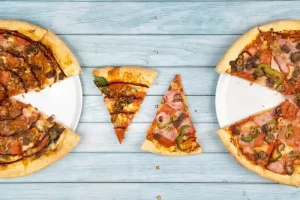
The pizza industry does not operate with a single universal size standard, and understanding the typical size ranges associated with each size designation helps calibrate expectations when ordering from different chains or independent restaurants. Small pizzas are most commonly eight to ten inches in diameter, a size that produces approximately six slices and is generally appropriate for a single person or a child’s meal. Medium pizzas typically range from eleven to twelve inches, producing eight slices and comfortably feeding two adults or three to four people as part of a larger multi-pizza order. Large pizzas, the most commonly ordered size at most pizza chains, typically measure thirteen to fourteen inches, producing eight to ten slices and serving three to four adults as a primary meal. Extra-large pizzas range from fifteen to sixteen inches and produce ten to twelve slices, making them suitable for four to five adults or a small group sharing multiple pizzas. Some chains and many independent pizzerias offer jumbo or party-size options in the eighteen to twenty-four inch range, which are primarily practical for large group settings where a single pizza needs to serve six or more people simultaneously. The critical caveat to all of these size categories is that the designations are not standardized across the industry. A large pizza at one chain may measure thirteen inches while a large at a competitor measures fourteen inches, creating a meaningful area difference of approximately twenty-nine square inches that affects both quantity and value without any visible difference in how the pizza is described or priced. Checking the actual inch measurement rather than relying on the size designation alone is the most reliable approach when ordering from an unfamiliar source.
How Chain Pizzerias Compare on Standard Size Measurements
The major pizza chains in the United States each have their own specific size measurements that are worth knowing for regular customers, because understanding the actual dimensions behind the size labels allows for more accurate ordering and more meaningful value comparisons. Domino’s offers small pizzas at ten inches, medium at twelve inches, and large at fourteen inches, with the fourteen-inch large being among the more substantial large offerings in the major chain category. Pizza Hut’s sizing follows a similar structure with personal pans at six inches, medium at twelve inches, and large at fourteen inches, though the chain also offers specialty large formats in specific crust styles that vary slightly from these dimensions. Papa John’s operates with small at ten inches, medium at twelve inches, large at fourteen inches, and extra-large at sixteen inches, making the Papa John’s extra-large one of the largest standard-menu offerings in the major chain category. Little Caesars has historically focused on a single large size of fourteen inches for its Hot-N-Ready product, simplifying the ordering decision but eliminating size flexibility. Independent pizzerias are the most variable in their sizing, with some New York-style establishments offering eighteen to twenty-inch pies as their standard large size, reflecting the New York tradition of generously proportioned pizzas, while Neapolitan-style establishments typically offer single-person pies in the ten to twelve-inch range regardless of what label they apply to them.
How Many People Does Each Pizza Size Actually Feed
The per-person feeding calculation is the most practically urgent question in any pizza size guide, and it deserves a more nuanced treatment than the standard industry formula of three slices per adult, which is a starting point rather than a reliable universal answer. Adult appetite for pizza varies considerably based on factors including the time of day, what else is being served alongside the pizza, the richness of the toppings, the thickness of the crust, and the individual appetites of the specific people being fed. A group of teenagers eating pizza as their primary meal will consume substantially more than the three-slice average, with four to five slices per person being more realistic for active young men in particular. A group of adults at a work lunch where the pizza is accompanied by salad and other options will often consume closer to two slices per person, especially women who may be watching their intake or simply have smaller appetites than the industry average assumes. Children under ten typically eat one to two slices, while children between ten and thirteen eat amounts that are genuinely unpredictable and range from child-sized to adult-sized depending on the individual. The most reliable approach to calculating pizza quantities for a group is to start with the three-slice-per-adult baseline, adjust upward for groups that are likely to eat heartily such as sports teams, teenagers, and parties where pizza is the only food, and adjust downward for groups where appetite is likely to be moderate such as office lunches, mixed-age family dinners, and events where pizza is one of several food options. Rounding up by one pizza from your calculated need is generally wise because the marginal cost of an extra pizza is low relative to the social cost of running short.
Pizza Size Recommendations for Specific Event Types
Different event types create different pizza ordering dynamics that a practical pizza size guide should address directly, because the feeding calculation for a child’s birthday party is meaningfully different from the calculation for a corporate lunch or a late-night adult gathering. For children’s birthday parties, smaller sizes in greater variety tend to outperform a small number of large pizzas, because children are pickier about toppings than adults and having more pizzas with varied toppings reduces the likelihood of any individual child finding nothing they want to eat. Ordering several mediums rather than a smaller number of large pizzas also creates the visual abundance that children respond enthusiastically to, making the table look generous and exciting in ways that three large pizzas do not, even if the total pizza quantity is equivalent. For corporate lunches where impressions matter, large or extra-large pizzas in variety create a professional appearance of generosity while being operationally simpler to manage and serve than many smaller pizzas. For adult parties where pizza is a casual centerpiece rather than a formal meal, large and extra-large sizes in two to three varieties covering the major taste preferences, cheese, meat, and vegetable, provides a reliable formula that consistently satisfies mixed groups without overwhelming simplicity or complexity. For late-night gatherings where pizza accompanies drinking and socializing, people tend to eat more than the standard estimate suggests because alcohol increases appetite and the social atmosphere encourages grazing, making the round-up rule particularly important.
Final Thought
A pizza size guide is, at its most practical, a tool for making a small but recurring decision better, more confidently, and with less waste. But there is something a little larger than pizza logistics in understanding how size, area, price, and appetite interact to create the experience of a meal shared with people you care about. Getting the order right means everyone at the table gets enough, the conversation flows without the distraction of scarcity or the mild guilt of excess, and the evening is exactly what it was supposed to be. The math is simple once you know it. The calculation takes seconds. And the experience of a perfectly ordered pizza table, where everyone is satisfied and nothing is wasted, is one of those small domestic victories that is genuinely worth the thirty seconds it takes to get right.